Showing posts with label Fine Motor Skills. Show all posts

Monday, June 29, 2026

4th of July Craft

This is a cute 4th of July craft for kids that is easy to create and fun to play with. Making it is also a good way for a child to work on their fine motor skills. 

Materials Needed:

Directions:

Cut a piece of card stock paper to the size of the "Push-up" cylinder/container, cover it, and tape it in place. Decorate the card stock cylinder with stripes, dots, or decorations of your choosing. Cut a handful of ribbons to 5-inches in length and curl the ends. Tape the ribbon onto the "pusher" component of the "Push-up" container. Remove the original "Push-up" cylinder. Insert the "pusher" component into the card stock cylinder. Push-up to launch the firework!!! 


Saturday, November 2, 2024

Developmental Baby Toys: Easy Grip Ball Activity...Another Favorite!


I'm excited to tell you about a fun activity to carry out with your baby using an Grasp Classic Ball and some cloth or organza tissue squares. All you have to do is stuff the cloth squares inside of the ball, and show your baby how to pull them out. This activity will help teach your little one about the concepts of "in" and "out." It is also a great activity to help them use both hands together and to work on their pincer grasp. You can also name the colors of the cloth squares as they pull each one out of the ball. Eventually, your baby will gain the skills to stuff the squares back inside the ball, but that may take a little while. If you don't have any cloth or organza tissue squares, you can just purchase some colorful cocktail napkins, and they will serve the same purpose. Your child will love this activity and it will fully entertain them!


Saturday, October 12, 2024

Developmental Baby Toys: A Few of My Favorite Things!

In this post and several future posts, I'm going to share a few of my favorite baby toys that are great for promoting your child's development! The toys that I will be featuring are wonderful for the development of a variety of skills, including cognitive, and fine and gross motor skills.
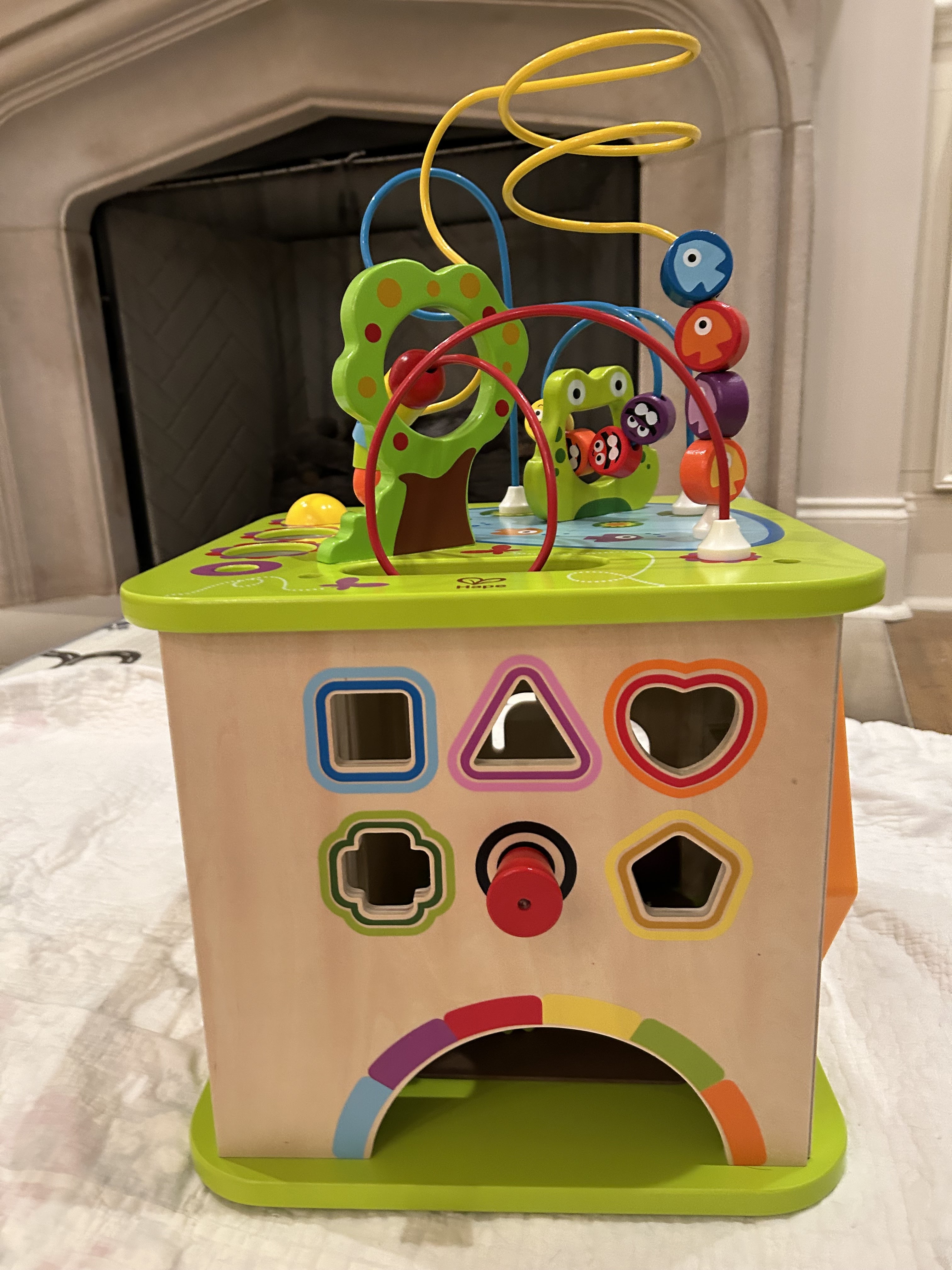
 This Country Critters Wooden Activity Play Cube will keep your baby busy! Each side includes a different activity center with wooden balls, a shape sorter, and much, much, more. My favorite thing about it is that is is sturdy enough for a baby to pull up on and cruise around the edges.
 The activity cube is recommended for ages 12 months to 6 years and will entertain your baby for hours. It is available here on Amazon. 

Sunday, August 11, 2019

Fun Fine Motor Tong Activity!

     Kids love this fun fine motor tong activity! The great thing about this activity is that it helps develop those fine motor skills that are important for writing, typing, using scissors, and fastening fasteners on clothing. Tong activities are also great for developing manipulation skills on the thumb, index, and middle finger side of the hand while working on stability on the pinkie and ring fingers.
     For this activity, you will need the following:
Non-Slip Children's Bathtub Appliques with Suction Cups
Mini-Tongs
Various Sizes of Pom Pom Balls
 Have the child use the tongs to grasp pom poms and place them in the suction cups.
Watch the video below of this child carrying out the activity! What a nice grasp and great control!
This activity is also a wonderful way to work on counting and matching and naming colors. Have fun!


Sunday, March 4, 2018

Clothespin Activities for Fine Motor Skills

The following clothespin activities will help your child strengthen the fingers, which will likely improve fine motor skills and help with handwriting and other manipulative tasks.  Vary the activity to work on matching colors, improving math skills, and spelling.

You Will Need:
A ruler or paint stirrer
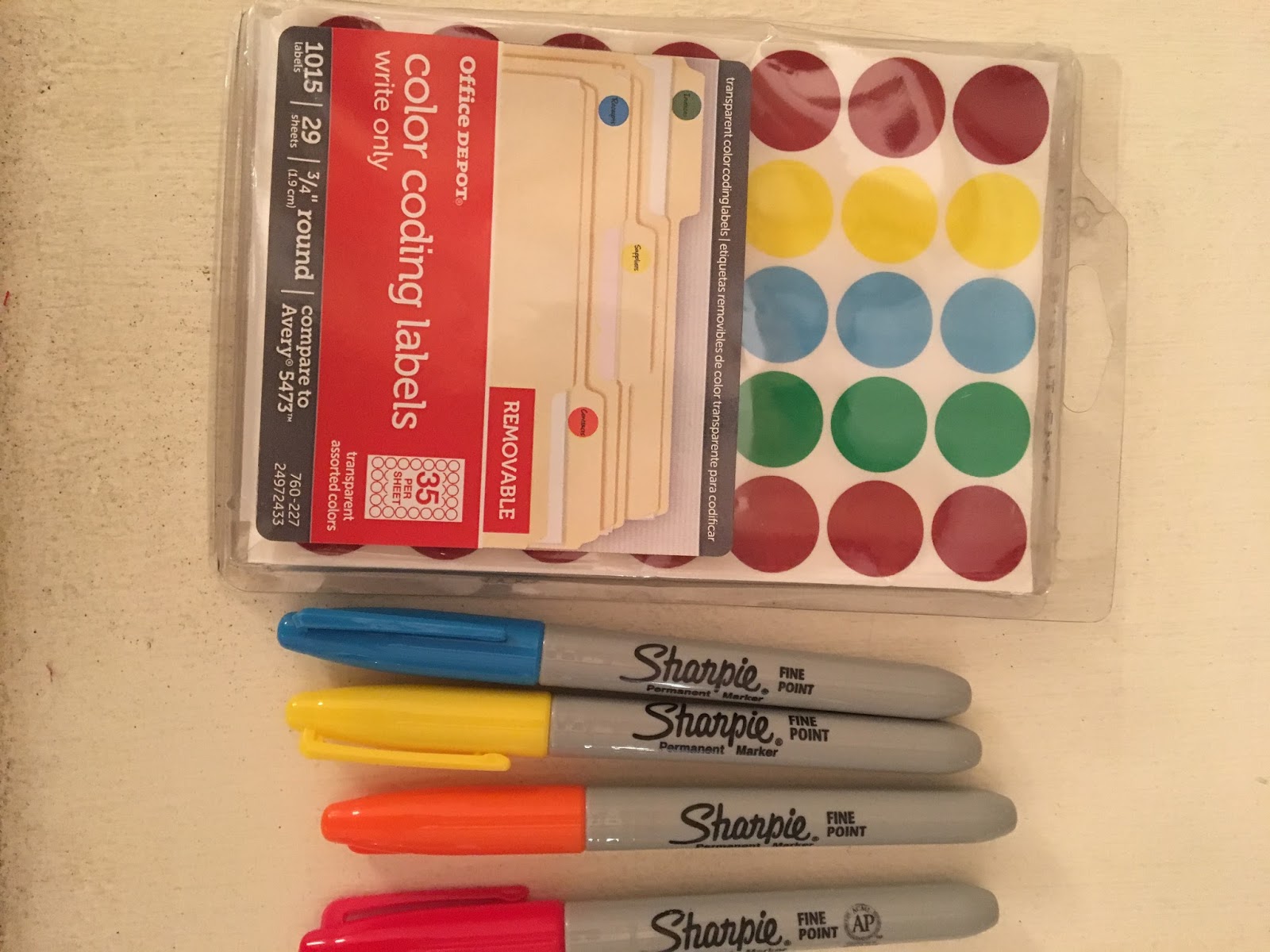
Different colors of Sharpie markers
Different colors of stickers
Clothespins

To Make the Activity: 
Place colored stickers on the clothespins and the paint stirrer.  You can also use a Sharpie to write/draw shapes, numbers, math symbols and letters on the clothespins and paint stirrer. 

Activity Instructions:
Have the child match and place the corresponding clothespins to the sticker colors.
Have the child spell words.
Have the child complete simple math problems.
Have the child can alternate which hands when placing and squeezing the clothespins.
If the child can't differentiate colors/numbers, etc. you can help them identify which one to match.
Position the stick to encourage the child to cross their midline.

Wednesday, August 16, 2017

Developmental Milestone Chart: Birth to 3-Months

Parents, teachers, and therapists need to understand typical child development and be aware of developmental milestones.  If we know what to expect when it comes to development, then we will know when to consult with the pediatrician if a developmental problem is suspected.  For this reason, I am happy to share a series of posts that will include developmental milestone charts for infants and children ranging in age from birth to 6 years of age.  Here is the developmental milestone chart for an infant ranging in age from birth to 3-months.

The project above was completed by Master of Occupational Therapy students at The University of Tennessee Health Science Center and posted with permission.

Sunday, January 8, 2017

Fine Motor ABC: A Must Have Book!

Are fine motor skills important?  Yes!  Research tells us that there is a connection between fine motor skill development and future science, math and reading skills.  It is also important to know that all young children spend a large percentage of their school days engaging in fine motor tasks.  If you are looking for a fun and motivating way to develop and improve a child’s fine motor skills, then “Fine Motor ABC” can help!
This fun-filled book includes a fine motor strengthening task for every letter in the alphabet.  The photographs are colorful and engaging, and they will attract and delight children.  The instructions are easy to follow and will put your child on the road to motor skill success!

This book is perfect for use at home or in a therapy session.  Use it to help your child improve his dexterity and gain confidence in his abilities!

 Sign up for a chance to win your own copy of "Fine Motor ABC" by following my blog (lower right side of this page) or click HERE to order a copy on Amazon!

Tuesday, May 17, 2016

The Therapy Share: A Wonderful New Resource!

Are you always looking for new treatment ideas and resources to use with your clients?  So is Deirdre Newburn, OTR/L!  Deirdre has been working an occupational therapist in the same skilled nursing facility for four years.  To say at times that she falls into “treatment ruts” would be an understatement.  However, she has found challenges when trying to find resources. Either the material is copyrighted and costs an outrageous amount of money, or the material is not easy to access.  Deirdre shares, “I have spent hours searching the internet for therapy protocols, educational handouts, or safety worksheets to share with my clients or their caregivers.  I have even surrendered at times and just made my own quick handouts for my patients.  I worked alongside a dear friend who had the same issue as a speech language pathologist working in the same setting before she left to work in the schools.  Together we shared our grievances for access to creative materials and came up with a solution!  After coffee shop meetings and late night text messages once our four little boys were in bed we created TheTherapyShare.com.”

TheTherapyShare.com is a new website devoted towards enhancing the ease of access to creative and original healthcare resources in order to enrich the lives of those we serve.  The design of the site is that of an online marketplace where healthcare professionals can upload their digital content to sell or share with their colleagues.  After much market research we found the most receptive populations to initially target were occupational therapists, physical therapists, speech language pathologists, and dietitians/nutritionists, but we hope to expand to encompass all healthcare professions.  The types of resources that are appropriate for uploading to the website are limitless: patient worksheets, home exercise programs, quick reference guides, tip sheets for patients, protocols, caregiver handouts, etc.  The website is growing rapidly, but there is still a great need for more resources to be uploaded to the site. 

If you are a practicing therapist who has created some of your own materials (or have always wanted to, but just need that little extra push) please consider visiting TheTherapyShare.com and uploading your resources for FREE.  The website also gives users the opportunity to create their own marketplace on the site where they can include their biography along with links to their social media platforms or businesses. 

The goal of TheTherapyShare.com is to create a “one stop shop” type of atmosphere for healthcare professionals to network and exchange their valuable information.  We hope others will join our mission and make The Therapy Share a great success! 

Click HERE to register with us for free AND opt in to receive our newsletter to be entered to win a $25 credit towards the purchase of products on our site.  Upload a product of your own to have your name entered twice.

Deirdre Newburn, OTR/L
CEO of The Therapy Share


TheTherapyShare.com

Tuesday, April 19, 2016

Coloring is Good for Development: Free Coloring Sheets!


If your child enjoys coloring, that's a good thing!  Coloring is a great way to improve a number of different developmental skills.  Fine motor skills and dexterity are required to hold and manipulate a crayon.  If the child doesn't use her thumb and fingers to hold the crayon, break the crayon into small pieces.  Coloring on a vertical surface using a small piece of crayon promotes a tripod grasp and finger flexion and extension, which are desirable!

Children can also learn about colors, shapes and other concepts when coloring.  It's also great for attention span!  For free coloring sheets, click on these links!

Click HERE for more free worksheets!

Saturday, August 29, 2015

A Fun Fine Motor Craft Idea for Kids....Baa Baa!!!

This DIY fine motor craft idea for kids is simple to make and your children will love it!  It's the perfect way to strengthen those small hand muscles and improve fine motor skills, and it's super cute :)
Items needed:

Small plastic container (an Ensure container works well)
Cotton balls
Straws
Construction paper
Black Duct tape
Glue
White pom poms
Tongs


Cut a hole about the size of a penny in the bottle (adults only).  Wrap the straws in Duct tape and attach them to the plastic bottle (like legs).
Have the child cut the sheep head out of black construction paper and attach two googly eyes, or make the eyes out of construction paper.  Then have the child glue cotton balls all over the body of the sheep. Don't forget to make him a tail!

Now for the fun part! Have the child put the cotton balls through the hole in the sheep's back.  He can use his fingers to work on a pincer grasp, or he can use the tongs to put the cotton balls into the container.  Either way, your child is working those fine motor skills. Because one hand is needed to stabilize the sheep, the activity is great for bilateral skills as well!

Browse my blog for more craft activities for kids!

Dear Readers, If you have found my blog to be helpful, please click here and "like" my facebook page... 
Thanks :) 
 

Sunday, September 28, 2014

Tennis Ball Mania!!! Therapy on a Shoe String Budget


The UTHSC Masters of OT students recently completed a number of awesome media projects! For the assignment, each student was given the name of a common household item.  They were instructed to design a creative, appropriate therapy activity for a patient with a specific diagnosis. They did an amazing job! This media project was submitted by Rochelle. Her common house hold item was a tennis ball!

Materials Needed:

Tennis Ball
Colorful Sharpies
Coins or Buttons
Decorative Pieces of Choice (markers, stick-on eyes, etc.)       

Directions:
-Cut a mouth in the tennis ball
-Decorate the ball

-Hold the ball with one hand
-Open the mouth by squeezing the ball
-Place coins or buttons in the mouth using the opposite hand

This activity addresses fine motor skills, bilateral skills, hand strength & motor coordination and addresses tactile awareness while providing proprioceptive input.

The project above was completed by one of our Master's of Occupational Therapy students at
 The University of Tennessee Health Science Center and posted with permission.

Dear Readers, If you have found my blog to be helpful, please "like" my Facebook page and follow my blog...Thanks :) 


Saturday, March 12, 2011

Handwriting Skills

         Writing is a multifaceted activity in which a child has to pay attention to many separate tasks at one time. Initially, a child has to think of a topic about which he is going to write, or formulate an idea for the text. He has to remember how to form each letter, and make sure to write the letters in the designated space and in the correct sequence on the page. Finally, there are the rules of spelling, grammar, and punctuation that must be attended to; all of this while staying focused amidst the many distractions that might occur. Considering all of these components, it’s no wonder that many children find handwriting to be a challenging task.
As I said in an earlier post, the foundation for good fine motor skills is postural control, so this is usually the first area that I assess when a student is referred to me for poor handwriting skills. If core weakness is present, the child will most likely have difficulty sitting at a desk with a proper “handwriting posture”. I address this issue by having the child work on the exercises described my post on Tuesday, March 1st. These activities are fun and easy and can be carried out in a therapy session as well as at home.
Once I know that postural stability is being addressed, I typically look at some of these basic hand skills:
  • Can the child rotate a pencil with one hand to use the eraser?  
  • Can he bring coins from the palm out to the fingertips, as if putting money in a soda machine? 
  • Can he perform that same task, with several other coins held in the palm, while bringing each coin out one at a time?  
  • Can he pick up a handful of change from a table, one coin at a time, bringing each coin into the palm and storing it while picking up the rest? 
  • Is he able to rapidly and sequentially touch the tip of each finger to the thumb?

If the child has problems with any of these skills, it might be an indication that there is weakness in the muscles of the hands and fingers. The activities listed on my March 3rd post are great for strengthening the muscles of the hands and they are also good for fine motor coordination. 

If you found this post helpful, please click here on and go to my facebook page and click "like". Thanks! 
Reference: Marsh, D., Hanft, B, Cohn, D. (1993). Getting a grip on handwriting. American Occupational Therapy Association, Rockville, MD.

Wednesday, March 9, 2011

More Fine Motor Activities

Writing on a vertical surface such as a wall is a wonderful way to develop fine motor skills. It puts the wrist into an extended position and facilitates coordination in the thumb, index, and middle fingers, while building strength and stability on the ring/index finger side of the hand. It also helps to develop the arches in the hand and helps with shoulder and elbow stability. Here are some fun ideas:
  • write or draw with chalk on a chalkboard.
  • place stickers on a vertical surface.
  • trace or stencil on a piece of paper taped to the wall.
  • color on a piece of paper taped to the wall or on an easel.
  • paint on an easel or on a large piece of paper taped to the wall.
  • play with magnets on a vertical magnetic board.
  • make shapes or designs on windows or the refrigerator using "wikki stix".
  • draw on a magnadoodle propped up against a wall.
  • you can also tape a piece of paper to the underside of a low table and have you child draw and color a picture while lying on her back. This is very therapeutic and kids love this!

 Would you like a chance to win this magnetic sketcher to work on fine motor skills? Just sign up as a follower on the right and send me an email to tummytimetips@gmail.com letting me know that you signed up. If you’re already following the blog, send me an email letting me know why you’d like to win the sketcher...send all emails to tummytimetips@gmail.com and Good Luck! :)


Tuesday, March 8, 2011

Fine Motor Skill Development


Inferior Pincer Grasp
Fine motor skills are the way that we use our fingers and hands to manipulate small objects. They are very important when we go to school and it's time to work with pencils, crayons, and scissors. However, fine motor skills begin to develop long before school age. At around 3 months old, babies begin to use their hands to grasp objects and their arms to swipe. Between 9 and 12 months of age, most infants can pick up a small object between the thumb and index finger pads, which is called an inferior pincer grasp. When an infant uses the tips of the thumb and index finger to grasp a tiny object, this is called a superior pincer grasp.

At two years of age, a little one can color with whole arm movement and holds a crayon in a fisted position with the thumb facing upward. By age 4, most children can imitate a cross and trace a diamond and a triangle, and by age 5 they can hold a pencil with 3 fingers, which is called a tripod grasp. This is the optimal grasp to have when writing, although there are others that are acceptable. Hand dominance is typically established by this age as well. 
Tripod Grasp


Thursday, March 3, 2011

Fine Motor Activities


Here are some activities that are great for working on fine motor skills:

Squeeze clothespins and place them on a ruler or paint stirrer that the student holds with the opposite hand. Be sure to only use the thumb, index and middle fingers. If necessary, hold a small peg or cotton ball in the ring and index finger for stabilization
 
-Play tug- of-war with small objects (plastic coffee stirrers, paper clips, etc.)

-Use tongs or tweezers to pick up small objects and place them into a container

-Use the thumb and index finger to pop “bubble wrap” used for packaging)

-Bring coins or buttons from the palms out to the fingertips to place in a bank while stabilizing others in the palm of the hand. Don’t use the table or other hand to assist

-Squeeze the trigger of a spray bottle with the index and middle fingers while holding the bottle with the thumb and other fingers

-Roll putty or play dough between the tips of the thumb, index and middle finger to make small balls. Make them as smooth and as round as possible. Be sure to keep the ring and pinkie fingers flexed and don’t use them to help. You may need to hold a peg or bead with the ring and pinkie finger to prevent you from using them.


Tuesday, March 1, 2011

Fine Motor Skills

Does your child have difficulty with fine motor skills such as writing and cutting? If so, then you'll probably find my next series of posts helpful. I'm going to be providing some resources, tools, and tips that will help with the development of fine motor skill and/or visual motor skills.

You may be wondering what the difference is between these two terms. Fine motor skills are the coordination of small motor movements in the hands and fingers that allow us to manipulate small objects with precise control. Fine motor movements usually occur in coordination with vision. This ability to coordinate motor movements with visual information is called visual motor skills.  

In order to be adept with visual motor skills, your child needs good vision and a strong foundation. That foundation begins with the stability of the trunk, shoulder, and neck muscles, also known as postural control. Development occurs from the trunk outward. For example,  a baby learns to roll over and sit up before they gain skilled control of their arms and hands. So if a child is having problems with visual motor skills, it's likely that they have some weakness or incoordination in the trunk, shoulders, and/or neck. That's why it's so important for infants to be exposed to plenty of tummy time from the first days of life. Tummy time and crawling play a big role in the strengthening of the important muscles that lay a strong foundation for future fine motor skills.

You can spot trunk weakness by noticing if your child frequently slumps with a rounded posture when sitting. You can also have your child lie on his stomach and ask him to stretch his arms and legs out and "fly like superman". If he has trouble assuming or maintaining this position, it's likely that there is some weakness in the trunk, shoulders and neck (also called the core muscles). Another good test of upper body strength is to "wheelbarrow walk" your child. See if he can propel himself without his arms collapsing while you hold him at the ankles or knees. An inability to do so also indicates muscle weakness.


If there is an issue with core weakness and incoordination, there are activities and exercises that your child can carry out that will strengthen these muscles. For the best result, at least 3 of these activities should be completed at least 3 times per week.


                                          Core Exercises
  • Play tug-of-war by holding each others hands, or use a towel, rope or therapy band.
  • Rowboat Game-You and your child sit on the floor facing each other and put your feet together. One of you lean back onto the floor without letting go of the other's hands, and the other pulls the partner back up, and continued.
  • Play "Frog" by squatting, hopping, and squatting again.
  • Crab Walk- Sit on the floor and place your hands on the floor behind you and lift your bottom off of the floor by pushing up. Propel yourself around the room like a crab.
  • Wheelbarrow Walks- Holding child at the knees or the ankles.
  • Squat to Stand- Stand up from a squatting position with arms outstretched, keeping heels on the floor and repeat. 
  • Airplane - lie on your stomach and lift your head, arms and legs. Hold the position for as long as you can.
  • Rocker- lie on your back, bend your knees and wrap your arms around your legs. Rock yourself back and forth.
  • Traditional Sit-Ups- provide support at the ankles.
  • Ball toss- have your child lie on the stomach on the floor, or over an ottoman. Have them pick up a ball and toss it into an empty box or garbage can. You can eventually use a slightly weighted ball or light wrist weights. 


Dear Readers, If you have found my blog to be helpful, please click here and "like" my facebook page...I'm trying to get my book published and this would be a great help! Thanks :)
 

AND the winner of the 16-inch therapy ball is "Hetha" or Heather, former middle school teacher turned full-time mom. Please contact me ASAP so I can ship this out to you. Congratulations!