Thursday, August 31, 2023

Get Ready for Kindergarten!!!


Image Credit: Carl Jorgensen

Parents frequently ask me what their child needs to do to get ready for kindergarten. I like to share this list of 25 “readiness” skills that kindergarten teachers have told me are important for a child to be successful in the kindergarten classroom.

Kindergarten Readiness Checklist

1)    Speaks in complete sentences

2)    Listens without interrupting

3)    Follows two-step directions

4)    Begins to share with others

5)    Is able to recognize authority

6)    Understands concepts such as “top,” “bottom,” “big,” “little,” “more,” “less”

7)    Able to follow basic rules

8)    Recognizes rhyming words

9)    Identifies some alphabet letters

10) Bathrooms independently

11) Button shirts, pants, coats, and zips up zippers

12) Can sort objects that are the same shape, color, or size

13) Recognizes and names at least 5 colors

14) Recognizes own first name in print

15) Recognizes letters in own first and last name

16) Begins to write some of the letters in own first name

17) Cuts with scissors

18) Trace basic shapes

19) Draws a line, circle, X and +

20) Works simple puzzles

21) Counts from 1 to 10 in correct order

22) Identifies the beginning sound of some words (C is for cat)

23) Runs, jumps, hops, throws, catches, and bounces a ball

24) Knows first and last name of parents

25) Adjust to new situations without parents being there

So get ready for kindergarten by practicing these skills with your preschooler and your little one will have a much smoother transition into school!


Thursday, July 20, 2023

DIY Froggy Puppet: A Fun Craft!!!

Here is a fun activity to work on fine motor and visual motor skills! It can be graded to be a developmentally appropriate activity for children of different ages and skill levels.

Supplies Needed:
Red & green construction paper
Red & green small paper plates
Google eyes
Glue gun
Scissors

Fold the red paper plate.
Cut the green paper plate in half as pictured below.
Using a glue gun, glue the edges of the white sides of the green and red paper plates together. Do not put any glue on the center of the plates. This area needs to be open because that is where the fingers will be placed to manipulating the puppet.
Nest, cut out a long red strip for the frog's tongue. Then cut out the eyes using the green construction paper as pictured below. Glue the googly eyes on the green paper pieces. I usually put X's on the spot where the child is supposed to put the glue.
Roll the the red strip of construction paper on a pencil to make it curl. Have the child hold either end of the pencil and twist it for a nice bilateral task. See the photo below.
Glue the eyes and tongue to the proper location on the paper plates. Once the glue dries, the puppet is ready!


Sunday, June 25, 2023

Evidence-Based Practice: Pediatric Feeding via Teletherapy Intervention

Photo by: Providence Doucet- Unsplash

PURPOSE: The authors of this study wanted to learn if sensory play delivered through a telehealth intervention would help children diagnosed with autism spectrum disorder better tolerate wet food items. Two children completed a 6-week treatment using a modified (23 step) Sequential Oral Sensory (SOS) approach that was developed by Dr. Kay Toomey.

DESIGN: Mixed-methods research design.

METHOD: There were 3 fifteen-minute treatment sessions that including play with a wet food that the child did not tolerate (mixed fruit), then the use of the SOS approach to trial the

mixed fruit cup, followed by a play-based reward portion. The child’s caregiver tracked the child’s food acceptance.

RESULTS: Both children accepted the fruit cup more at the end of the study than at the beginning.

CONCLUSION: This study’s finding provide preliminary evidence that by using caregiver education and teletherapy, children’s acceptance of non-preferred wet food may increase through tactile play and tracking of progress using the SOS hierarchy.

Reference:

Hawkins, J., Bileck, A.,  Brown, A., Eckert, H. Smith, D. (2022). Pediatric feeding via teletherapy intervention. American Journal of Occupational Therapy, 76(Supplement 1), doi: 10.5014/ajot.2022.76S1-PO45


Tuesday, June 20, 2023

Children learn through play!


 Image courtesy of nenetus at FreeDigitalPhotos.net

Children learn about the world around them through exploration and play. The role of play in child development is important for the development gross motor, fine motor and social skills. Play can be as simple as imitating the sounds that your infant makes, or it can be more involved, such as putting puzzles together, stacking blocks and imitating complex block patterns. Play activities such as these are great for motor and perceptual development, and they are also wonderful for social skill development.

Parents and caregivers need to have a basic understanding of developmental milestones in childhood. This knowledge will be helpful when encouraging your child come up with ideas for play.

Here is a brief early developmental milestone chart of skills that influence play. Please keep in mind that all children develop at their own individual rates, so the ages for acquiring these milestones may vary from child to child.

Begins to show interest in and curiosity about the environment – 4 to 6 months
Object permanence emerging/pointing to pictures and objects- 10 months to 1 year
Imitation and solitary play skills- 1 year to 15 months
Parallel play and symbolic play- 2 years
Interactive play and taking turns- 2 ½ to 3 years

Tuesday, April 18, 2023

Feed the Gator: Prescissor Skills Activity!

 Feed the Gator!


This is an easy activity to make that requires just a few objects (tongs, pom pom balls, construction paper, glue, and a small disposable tin container. The activity promotes separation between the two sides of the hand, and it builds the muscles and coordination needed to develop scissor skills and fine motor skills.

The first step is to decorate the pan using glue and construction paper. You can make the pan into a gator, frog, or even a bear! Be sure to add the eyes, tongue, and teeth. 

To have the child complete the task, just place the pan on it's side and instruct them to "feed the gator" the pom poms! Click on this link to watch "feeding the gator!"

Suggestions for grading the activity
• Using different tongs (more or less resistance)
• Different size pom poms (smaller = more difficult; larger = easier)
• Smaller target/container (smaller target = requires more precision, more difficult)

This project was completed by a Master of Occupational Therapy student at The University of Tennessee Health Science Center and posted with permission.


Sunday, April 2, 2023

Using Wikki Stix for Pre-writing Skills!

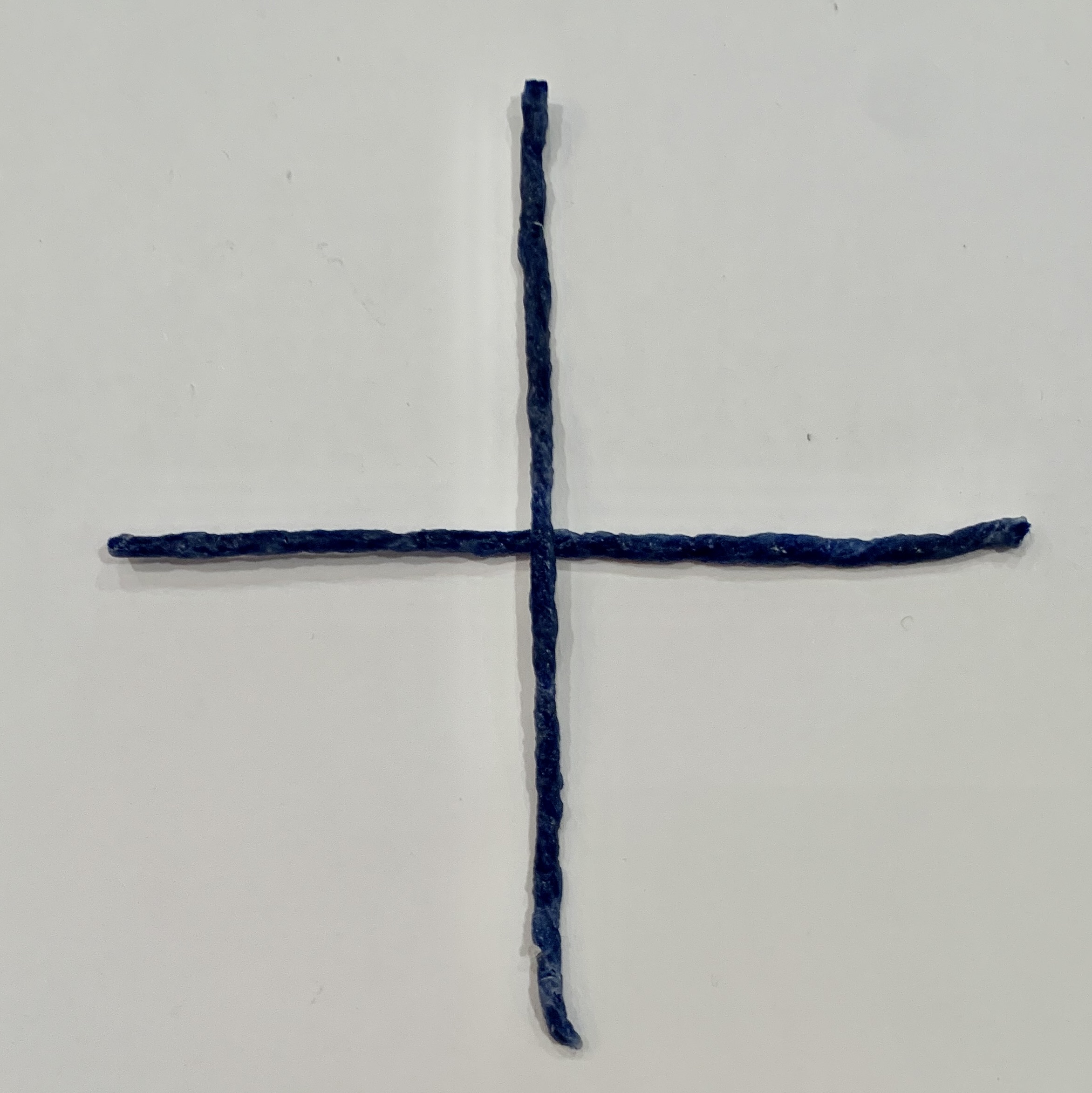
I love Wikki Stix! What are they? Wikki Stix are pieces of yarn dipped in different colors of non-toxic wax that can be used to form shapes, design, numbers, and letters! They are great because they are reusable and can be cut into different lengths. They will also stick to different surfaces such as paper or a table and be easily removed.

For prewriting skills, you can form a circle (as seen above) and instruct the child to make one just like the one you made. You may need to provide some assistance with forming the circle at first.

You can do the same with a cross (as seen above)!

And you can also have the child copy letters or numbers!

There are many other uses for Wikki Stix. You can use them to make mazes for tracing through,  and you can even use them to outline the edges of a coloring deign to help teach a child how to color within the lines!


Friday, March 24, 2023

Fun Activity for Visual Perceptual Skills!

Making and copying designs with foam shapes is a great way to have a child work on their visual perceptual skills. Start by having the child create a simple design using 3 to 5 shapes. You can then copy the design that they created.

Next swap it up. You create another design, and ask the child to make one just like yours. If the first one you create is too challenging, simplify it by using fewer shapes.

When your child is able to copy the designs independently, gradually make them more complicated so that the child has a "just right challenge!"

The foam shapes are available on Amazon.