Monday, January 8, 2024

Make your own Dino Rescue game!

 You can create a dinosaur board game just like this!

Materials:
Cardboard
Construction paper
Clothespins
Large die
Small plastic dinosaurs
Images were downloaded from free online resources
Glue

Create the game cards by including different activities. Examples are: “Stretch tall like a brachiosaurus; Bad weather ahead! Go back 3 spaces; Add a piece to the puzzle; Stretch like a stegosaurus. Do 5 cat/cow poses.”

The object of the game is to make it all the way around the board before the volcano puzzle is complete. This is a wonderful activity that works on taking turns, visual perceptual skills (completing the puzzle), fine motor skills (squeezing and placing the clothespins), learning colors, counting, and much more!

The game’s directions are as follows: 

1. The youngest player goes first.
2. All dinosaurs begin at the starting square.
3. Roll the dice to see how many spots to move.
4. Draw a card corresponding to the color you land on.
5. Follow the card’s instructions.
6. Reach the island of safety by making it all the way around the board.
7. Reach the island of safety before the volcano puzzle is complete!

UTHSC MOT student, Allison Hyatt
Class of 2025

This project was completed by a Master of Occupational Therapy student at The University of Tennessee Health Science Center and posted with permission.

Saturday, December 30, 2023

DIY Dry Erase Slant Board!

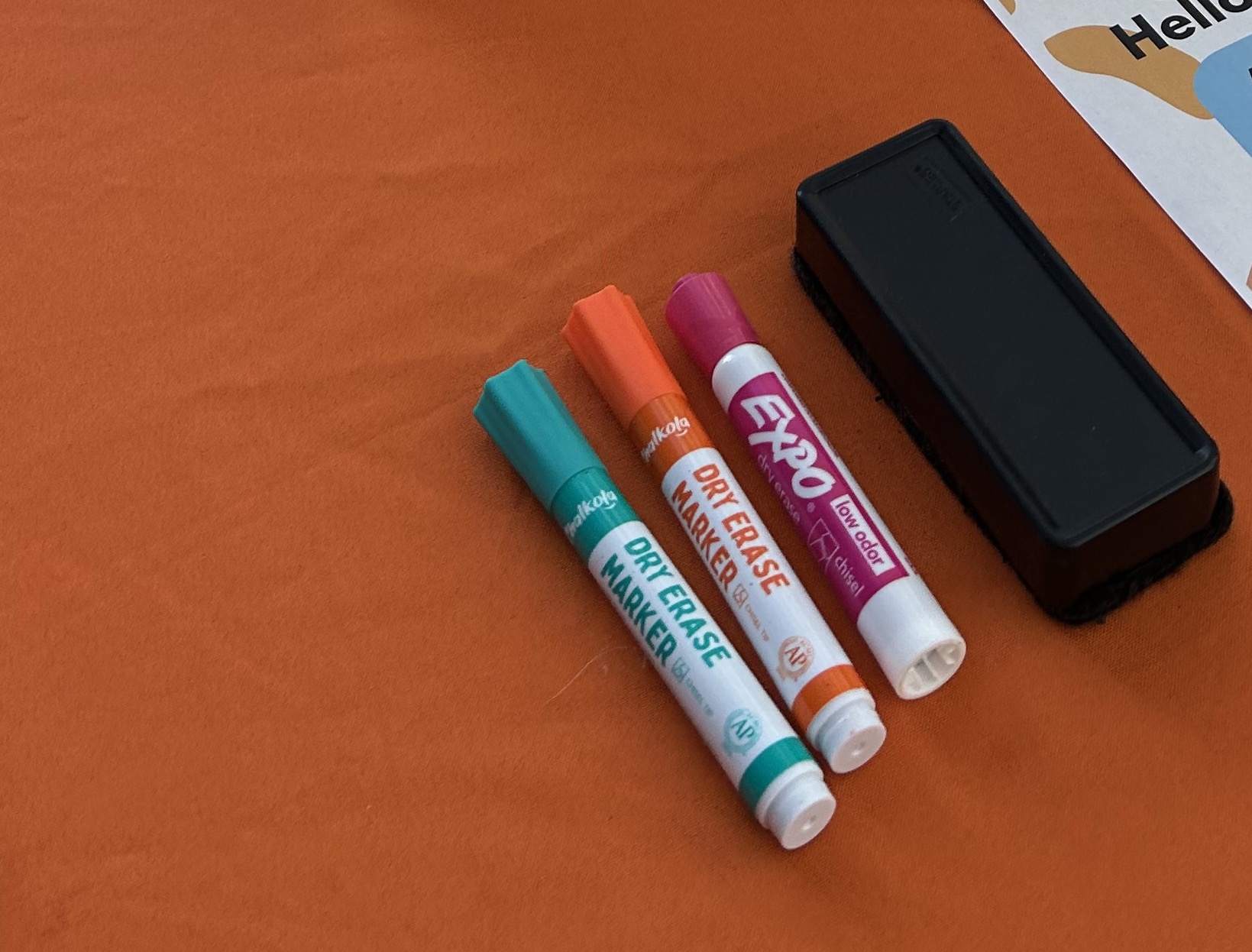
Check out this DIY reusable slant board that does not require paper to write on! The slant board is made from cardboard, and the writing surface is wrapped with a sheet protector so that it can be written on with dry erase markers, and therefore erased and reused. 

Using a slant board for coloring or writing tasks puts the wrist in a slightly extended position which helps a child move their wrist in a fluid motion when forming letters and promotes a more refined pencil grasp. Additionally, a slant board positions the writing surface in the line of vision which promotes an upright posture. Slant boards are also great for reading!

This project was completed by a Master of Occupational Therapy student at The University of Tennessee Health Science Center and posted with permission.

Tuesday, November 28, 2023

Therapy on a Shoestring Budget: Homemade Therapy Putty

Here is a recipe for homemade therapy putty that every pediatric occupational therapist needs!


Ingredients     


4-ounce bottle of Elmer's glue
1/4 cup cornstarch
1/4 teaspoon borax
1/4 cup of hot water
3-4 drops of food coloring

Directions
Pour 4-ounce bottle of glue into bowl

Measure 1/4 cup of cornstarch and pour into same bowl
Add 3-4 drops of food coloring to bowl
Stir until everything is mixed
Measure & pour 1/4 teaspoon of borax into a separate bowl
Measure & pour 1/4 cup of hot water into bowl with borax
Mix the hot water & borax together until everything is dissolved
Once borax is dissolved, pour into bowl with glue/cornstarch
Knead the combination until putty becomes firm
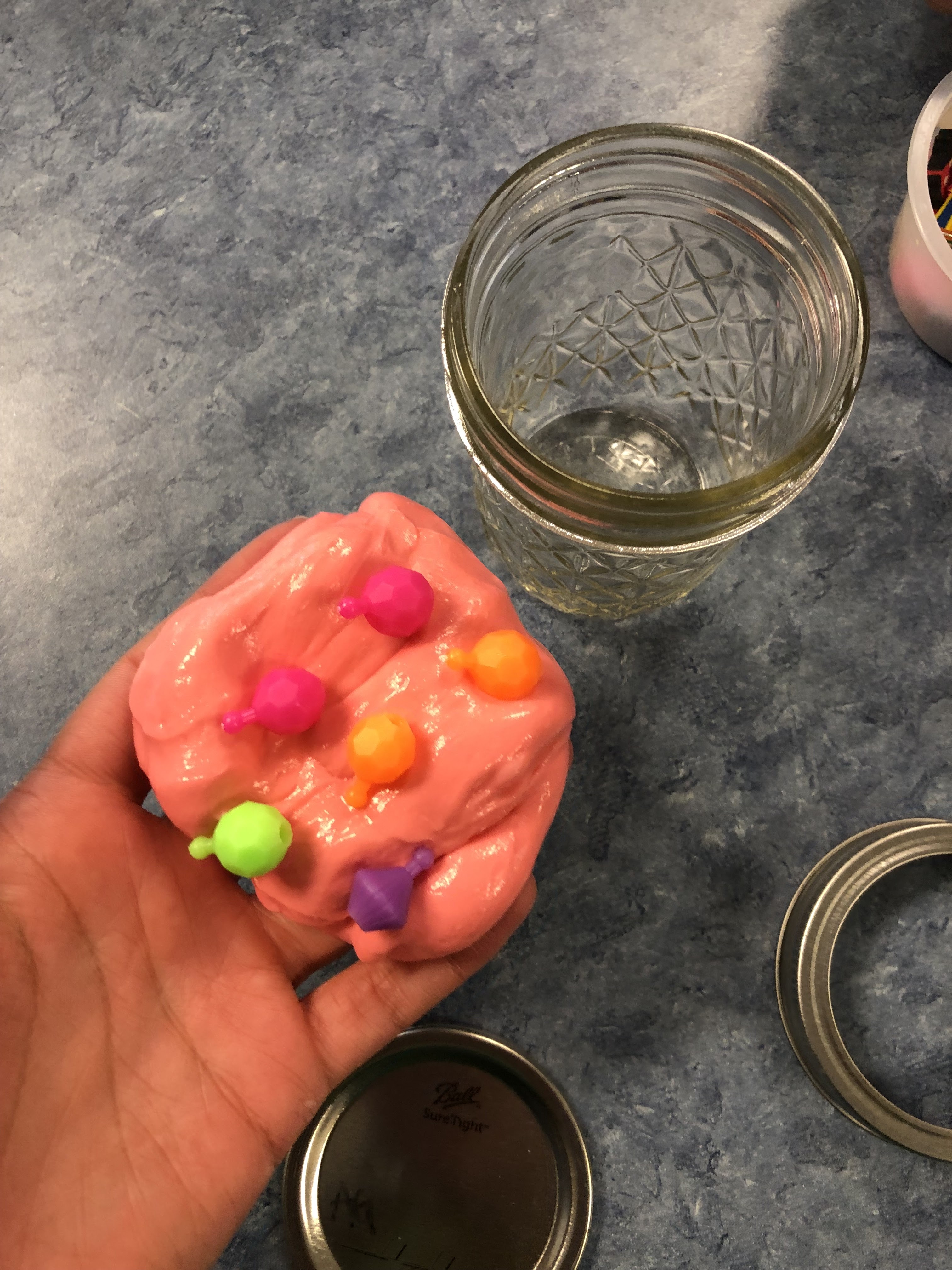
Add beads or other small objects of your choice  
Seal in an air tight container 

Have fun with the putty! 

Guest post by UTHSC MOT students: Aliyah Hanks, MOT/S & Akosua Odei, MOT/S


Saturday, October 28, 2023

How To Get Baby To Sleep Through The Night

Do you have problems with your baby sleeping through the night? Maybe he falls asleep just fine, but then he wakes up in the night and calls out for you. This can be even more of a problem when baby gets big enough to climb out of bed and comes to Mommy and Daddy’s room. If you are dealing with any of these situations, you may want to consider establishing a regular bedtime routine for your little one. Read on to discover how to get baby sleeping through the night. 

Have a Routine

Research suggests that establishing a consistent bedtime routine for infants and toddlers helps a baby to fall asleep more quickly, and it even increases the duration of their sleep. Studies have found that toddlers who follow a bedtime routine each evening are less likely to call out to their parents or crawl out of the crib during the night. Interestingly, the mother’s mood also improved significantly once a regular bedtime routine was established. (Probably because she’s getting more sleep!)

Exactly why does this make a difference? Babies need to learn how to fall asleep on their own, without being rocked or having a parent in the room. If baby associates sleep with being rocked or having a parent close, when she wakes in the night, she will need one of these to fall back asleep. Obviously, she will cry or call our for Mommy to come rock her back to sleep, and this cycle will repeat itself every time she wakes in the night.

Stick with it

Starting a bedtime routine may be difficult at first, especially if your child is used to being rocked to sleep. You’ll have to put your infant in the bed and he will have to learn to fall asleep on his own. This will probably mean crying himself to sleep. At first. I’ll admit, I had a very difficult time with this, and my husband had to help; however, after a couple of nights, the crying did not last as long, and it wasn’t long before everyone in the family was sleeping all night. 

A bedtime routine provides a smooth transition from an active day to the calmness of sleep. A basic routine such as putting on pajamas, brushing teeth (when baby is old enough), reading a story, and a goodnight kiss lets a child know what to expect every evening. An added bonus is that children usually love having their parent’s undivided attention! The time together before a child falls asleep is the perfect time to stay connected. So if you haven’t already started this wonderful habit, do it tonight!


Saturday, September 23, 2023

Discipline Out of Love

As parents, we must have a plan when it comes to disciplining our children. We need to know exactly what we are going to do when our child misbehaves. We may wonder how love and discipline go together. I’d like to share a few guidelines that I've found to be very helpful when comes to discipline.

* Discipline out of your Love for your child...yes love and discipline do go together!

* Set clear expectations and guidelines, and post these guidelines as your “house rules.”


* Set reasonable limits and keep expectations age appropriate.


* Be consistent. Follow through with consequences every time.


* Provide strong consequences when a child deliberately disobeys.


* After the child is receives a consequence, take a moment to teach a lesson related to what the child did wrong and what should have been done.


* Remember, as parents, if we establish ourselves as the leaders of the family, discipline will not have to occur as often.


When it comes to discipline, is it is critical to be consistent, fair, and firm. Most importantly, don’t worry about being your child’s friend or buddy. That is not our job. As parents, our job is to be a parent and to prepare our children to function in this world as responsible citizens. Remember, love and discipline! It's a tough job, but we can do it!


Thursday, August 31, 2023

Get Ready for Kindergarten!!!


Image Credit: Carl Jorgensen

Parents frequently ask me what their child needs to do to get ready for kindergarten. I like to share this list of 25 “readiness” skills that kindergarten teachers have told me are important for a child to be successful in the kindergarten classroom.

Kindergarten Readiness Checklist

1)    Speaks in complete sentences

2)    Listens without interrupting

3)    Follows two-step directions

4)    Begins to share with others

5)    Is able to recognize authority

6)    Understands concepts such as “top,” “bottom,” “big,” “little,” “more,” “less”

7)    Able to follow basic rules

8)    Recognizes rhyming words

9)    Identifies some alphabet letters

10) Bathrooms independently

11) Button shirts, pants, coats, and zips up zippers

12) Can sort objects that are the same shape, color, or size

13) Recognizes and names at least 5 colors

14) Recognizes own first name in print

15) Recognizes letters in own first and last name

16) Begins to write some of the letters in own first name

17) Cuts with scissors

18) Trace basic shapes

19) Draws a line, circle, X and +

20) Works simple puzzles

21) Counts from 1 to 10 in correct order

22) Identifies the beginning sound of some words (C is for cat)

23) Runs, jumps, hops, throws, catches, and bounces a ball

24) Knows first and last name of parents

25) Adjust to new situations without parents being there

So get ready for kindergarten by practicing these skills with your preschooler and your little one will have a much smoother transition into school!


Thursday, July 20, 2023

DIY Froggy Puppet: A Fun Craft!!!

Here is a fun activity to work on fine motor and visual motor skills! It can be graded to be a developmentally appropriate activity for children of different ages and skill levels.

Supplies Needed:
Red & green construction paper
Red & green small paper plates
Google eyes
Glue gun
Scissors

Fold the red paper plate.
Cut the green paper plate in half as pictured below.
Using a glue gun, glue the edges of the white sides of the green and red paper plates together. Do not put any glue on the center of the plates. This area needs to be open because that is where the fingers will be placed to manipulating the puppet.
Nest, cut out a long red strip for the frog's tongue. Then cut out the eyes using the green construction paper as pictured below. Glue the googly eyes on the green paper pieces. I usually put X's on the spot where the child is supposed to put the glue.
Roll the the red strip of construction paper on a pencil to make it curl. Have the child hold either end of the pencil and twist it for a nice bilateral task. See the photo below.
Glue the eyes and tongue to the proper location on the paper plates. Once the glue dries, the puppet is ready!